Greatness is Earned, Never Given: Meet Rasmus Mencke, Webnode’s New Leader
September 16th, 2025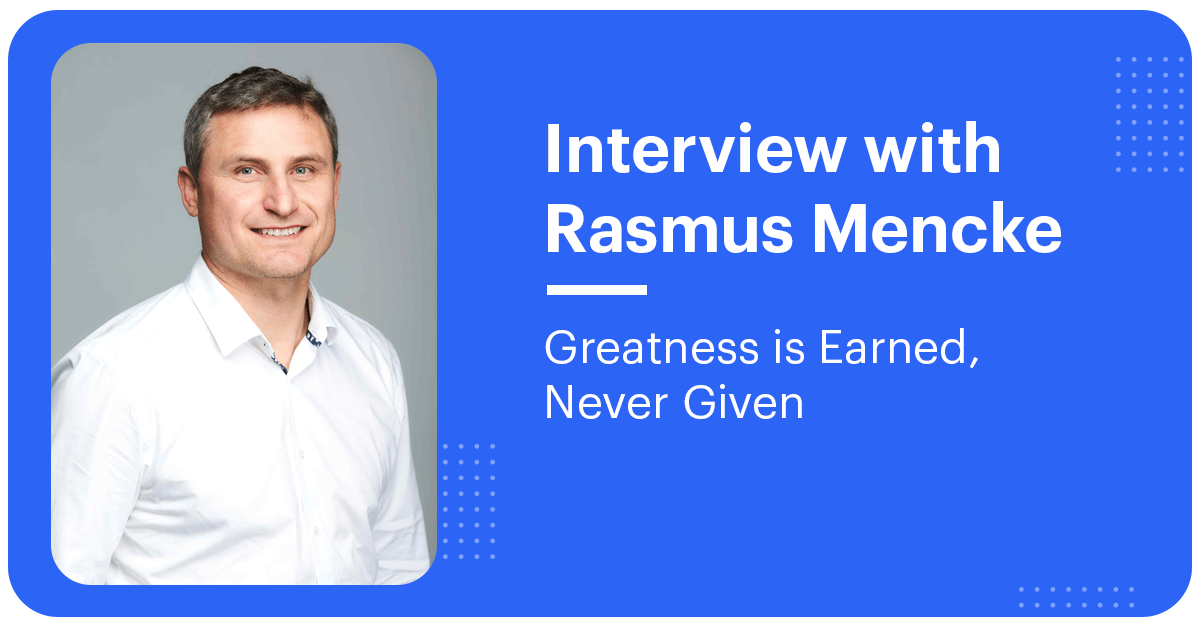
Exciting news! After seven years, Webnode is changing its leadership. Rasmus Mencke has taken on the role of Chief Product & Delivery Officer. We asked him what brought him from Silicon Valley to Europe, what kind of leadership inspires success today, and how he envisions Webnode’s future in the era of AI.
You are currently based in Italy. Why did you choose Milan as your home?
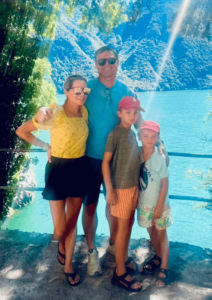
I’m Danish by birth, but my life has taken me across the world — two decades in California, then Denmark, Sweden, and now Italy. Milan offers the perfect balance: a vibrant, international city at the heart of Europe, with a great quality of life for me, my American wife, and our two boys.
We love the easy access to nature — just yesterday I was hiking by Lake Como, only 45 minutes away. It reminds me of California: city energy combined with outdoor adventure. And of course, I love Italian food.
What first brought you to the U.S. 20 years ago?
I’ve always been ambitious and goal-driven. After working at Oracle in Denmark, I got an opportunity to transfer to Oracle HQ in Silicon Valley, at the top of the dot-com boom. Opportunities like that you simply can’t miss.
I spent almost 20 amazing years at Oracle and then Salesforce, at Salesforce, I was part of growing the company from $300 million to $10+ billion in revenue during my time there.
Have you experienced any culture shocks after returning from the United States?
Adjusting from an American mindset to life in Denmark and Sweden was interesting. In Sweden, I was surprised to see empty offices during the summer — a concept almost unimaginable in the U.S.
However, the Scandinavian focus on work-life balance can lead to excellent results. In the U.S., work and personal life tend to blend. Personally, I spent years working very hard to develop my skills and grow as a leader. You need to earn the right to become a leader.
What leadership style can employees expect from you at Webnode?
I believe in leading by example, I am competitive and like to win, and the team can expect me to push to ensure that we have a winning organization and continue to grow.
We are in a very competitive market, AI is changing the narrative, and we have to evolve with the changes in the market. You will see me focus on AI initiatives across the organization. It’s also important to me to celebrate our wins and successes and have fun along the way.
Did you bring any habits from the U.S. that might be difficult for people in Europe to adapt to?
I am not shy, and I bring a very American “anything is possible” mindset. I see that as positive — I want people to feel comfortable taking risks and even failing. Innovation happens when failure is something we do not fear.

Webnode’s headquarters are in Brno, but you live in Milan. Will you stay in Milan or are you eventually planning to move again?
Webnode, like the rest of Team.Blue, has a strong remote-first culture. Since being physically in the headquarters isn’t essential for my role, my home base will remain Milan. My plan is to be in Brno at least once a month to spend time with the team. Day to day, we’re constantly connected via Slack and other tools. Presence matters, but thoughtful communication is even more important.
How do you keep remote people engaged?
I believe that happy people create great products, and it’s important to think about all of us as one team. In larger online groups, it can be harder to build that feeling, so I focus on positivity and celebrating successes while also pushing us to improve. Motivation also comes from personal attention, so I rely on one-on-one conversations whenever possible.
What convinced you to join Webnode?
Webnode stood out in my search as I explored new opportunities. Webnode is a scale-up with strong potential to accelerate its growth. I was impressed by the professionalism at Team.Blue — the structured, goal-oriented mindset. With Team.Blue’s backing, I felt I could enjoy the best of both worlds: the agility of a smaller company with the support of a larger organization like Team.Blue.
What are your key strategies in business?
Four things. First is data — making decisions based on solid information. Second is speed — act fast. Third is experimentation: we try, sometimes fail, learn, and iterate until we succeed. Finally, automation is crucial — streamlining processes so we can deliver faster.
I also believe in empowering everyone on the team to take initiative rather than waiting for instructions; results follow naturally when people are encouraged to act.
Where do you see Webnode in the AI era?
Innovation feels fast, but honestly, today is the slowest it will ever be. With AI, Webnode is in a strong position thanks to our tools, customer insights, and Team.Blue’s support. For example, building a website can already be simplified with AI — answer a few questions, and you get a tailored site in seconds. But keeping it fresh is harder — and that’s where I see big potential.
Many small business owners, like plumbers or hairdressers, aren’t natural writers – or don’t have time for it. With AI, they just provide ideas, and we generate their content automatically, update the site, translate it, and even make it accessible for all users. My goal is to use AI not only to innovate but to make real business impact for the thousands of small businesses who are creating their digital presence with Webnode.
Do you have a personal motto that drives you?
Not really, but I like analogies. One I often use is: “Greatness is Earned, Never Given.” The idea is simple: hard work and effort are rewarded; we need to work for our talent. For me, progress means improving every day, even by a small margin. Like an athlete improving a little bit every day, and those tiny improvements will make them into champions.
At Webnode, we can’t compete with the biggest players head-on, but we can find niches and opportunities where we can excel. Focus on those, and in our own way, we win.
What characteristics should a good leader have?
For me, leadership starts with leading by example. A clear strategy and the discipline to follow it long term are essential, but people always come first.
Rasmus Mencke, Chief Product & Delivery Officer of Webnode
My job is to support them, create a safe environment, and inspire them to take risks. Innovation happens when teams feel secure enough to experiment. I want people to proactively take responsibility for jobs and seek out opportunities for improvements and change — everyone should feel ownership. I would never say something like ‘You shouldn’t have done that’ — it doesn’t lead anywhere.
What do you value in people?
Honesty, transparency, and empathy. I enjoy speaking with anyone in the company, hearing about their projects, and finding ways to support them. I also value experimentation — even with crazy ideas. Without it, you can’t break boundaries, and without breaking boundaries, you can’t grow.
What or who helps you grow?
I do a lot of different things. Recently, I started coding again to keep a hands-on, practical approach. I follow podcasts, YouTube channels, and stay in touch with some of the best talents I’ve worked with in Silicon Valley to keep up with trends. I’m part of groups where we share ideas, sometimes hundreds of messages a day. But growth isn’t only about work — I hike, stay active, and I used to race sailboats in San Francisco, something I hope to return to. These activities keep me energized and creative.
Are you able to disconnect from work easily?
Not really. I can only stay away from the computer for so long, especially if my family is not around. Lately, coding and AI keep pulling me back — I love experimenting and learning new things.
What does a typical day look like for you?
I start with a cup of coffee and a short run or workout— though it’s been hot in Milan, so even 5 km run can be a bit of a challenge. Afterward, I grab a cappuccino or coffee and then check Slack, emails, the news, and sales data. Most of my day is filled with meetings, where AI helps me prepare more efficiently. I also make time for strategy, reporting, and learning about Webnode.
My quietest hour is usually around 5-6 PM, when I plan for the next day and wrap up outstanding tasks. In the evenings, I like to unwind — watching Netflix or sometimes coding just for fun. I’m also trying to pick up a bit of Italian. I love learning new languages.
Are you trying to learn some Czech too?
If I lived in Brno, I would definitely try to learn at least some Czech. However, our team at Webnode is international, and English gets me wherever I need to be. Hopefully, I will learn a few Czech words.
What is your approach to learning an environment and business you’re new to?
It’s quite simple: I talk to the right people and listen. For example, if I don’t understand how affiliate marketing works at Webnode, I’ll find the right person and ask them to spend an hour or two guiding me through the topic.
You’ve been in your new position for three months now. What has been the biggest challenge for you so far?
Getting to know both the people and the business. Webnode has a complex setup, so I’m still learning how everything operates while also introducing myself and building trust. When you join a company as a new leader, people naturally wonder: Who is he? How is he? What’s going to change here?
Part of my job is to show them that I’m approachable, here to support them, and focused on helping us succeed together.
How would you describe yourself to colleagues who haven’t met you yet?
I’m just a regular person like anyone else, with a genuine passion for building products and driving innovation. I believe happy teams build great products, so I try to create a motivated, supportive environment. I bring an outgoing, direct, American-style approach. On a personal note, I balance work with family life; I have a wife and two young boys. My goal is to combine ambition, team happiness, and fun.
What advice would you give young leaders who want to become CEOs?
First of all, work hard. Then, never stop learning, and don’t just stick to your own area of expertise. To lead, you need to understand marketing, finance, HR, and more – basically, get a broad view on many topics instead of focusing on just one thing.
Moving from expert to CEO also means relying on others and being ready for tough conversations and tough decisions. A lot of young leaders don’t think about the “dark side” of leadership. In Silicon Valley, I learned from people like Sheryl Sandberg, who is empathetic but also very direct: if you want to be a leader, you have to be realistic. You can’t be friends with everyone — sometimes that makes decisions, like letting someone go, impossible. Leadership takes clarity and courage.
And if you’re unsure about a decision?
You know when something feels right. Don’t drag out decisions — waiting rarely brings better answers. If it does not feel right, the answer is, in general, no. However, I do like to be proven wrong.
Your next visit to Brno is coming up. What’s on your list besides work?
I will be visiting Brno again at the end of September, where we will be hosting an All Hands meeting and aligning on priorities. I am looking forward to meeting everyone again for a fun and engaging event. Every time I visit Brno, I love to try the local “guláš”, it’s delicious.
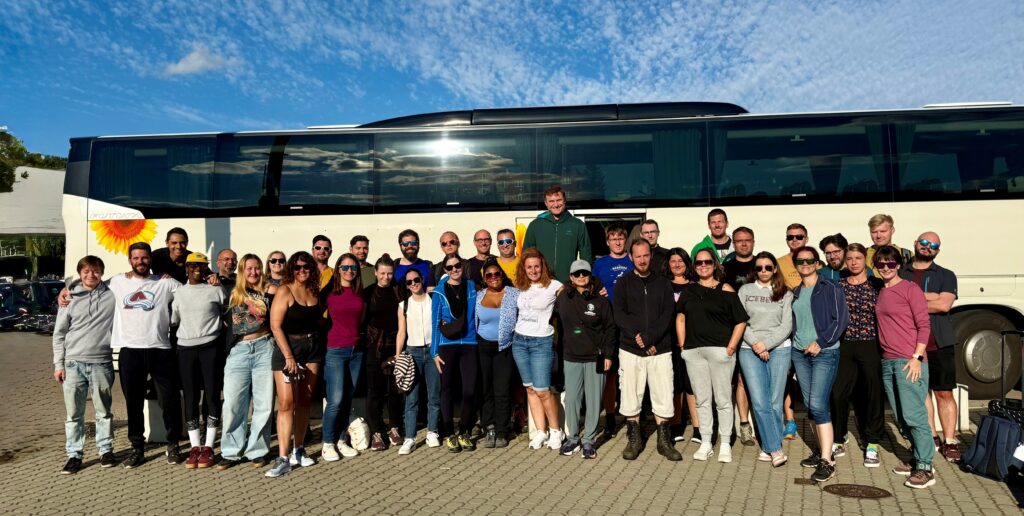
Webnode’s mountain trip
Tip: Read also an interview with Webnode Chief Personnel Officer, Zuzana Marková

Jana LeBlanc is a Czech publicist, author, and blogger. She publishes in the magazines Moje psychologie, Respekt, Deník N, Reportér. She is the author of the book “Moje bejby Amerika”. She writes the blog “Co mi udělalo radost” – about life in foreign countries and the experiences of a mother of bilingual sons.