How to Start a Blog in 2026 (Step-by-Step for Beginners)
November 14th, 2025
Starting a blog in 2026 is easier than ever. Whether you want to share your passion, build an audience for your business, or create a new income stream, this beginner’s guide shows you how.
You’ll learn to set up your blog, publish content readers enjoy, and discover practical ways to turn your posts into profit – all in clear, simple language anyone can follow.
Find out:
- Why blogging still matters in 2026
- Step-by-step: how to start a blog successfully
- How to find blog ideas (with free examples)
- Blog content creation — on your own, with AI, or a copywriter
- Why most bloggers fail
- How to promote your blog and grow an audience
- How to make money with a blog
- How much a blog costs (free vs. paid plans)
- Can blogs still be successful in 2026 and beyond
Why blogging still matters in 2026
Blogging is still a thing in 2026. Far from being dead, it’s alive and thriving.
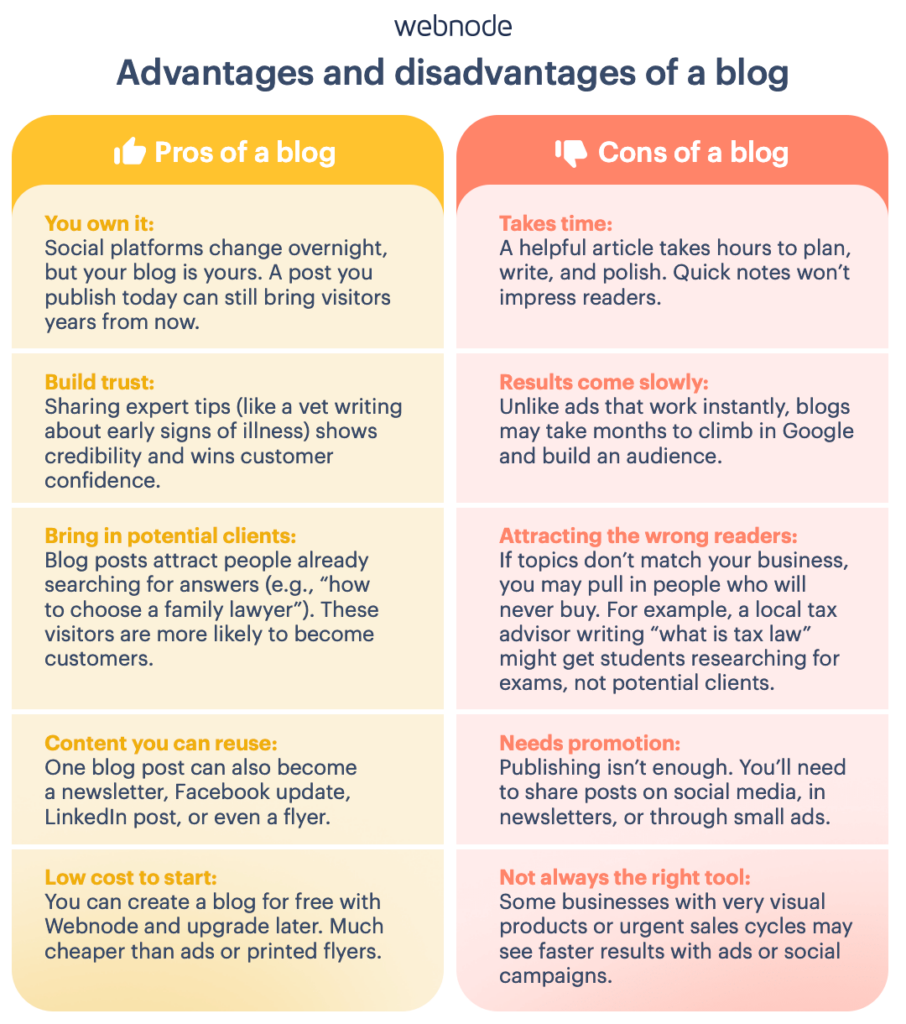
- Among all content types, blogs remain the leading choice for demand generation efforts (Content Marketing Institute, 2024).
- 47% of B2C marketers say short articles and blog posts delivered the best results for their content marketing in the past 12 months (Content Marketing Institute, 2024).
- Nearly 80% of small business owners and marketers still create content themselves, while 17% hire in-house writers and 14% rely on freelancers (Semrush, 2024).
- Bloggers who dedicate 6+ hours to crafting a single post report strong content marketing results 35% of the time – significantly higher than the 21% reported by those who spend just 2–3 hours (Orbitmedia, 2025).
- Yet turning content into conversions remains a challenge – 55% of B2B marketers say it’s their biggest struggle (Content Marketing Institute, 2024).
- On the consumer side, 29% of B2C marketers report their content marketing is “very successful,” and 52% say it delivers moderate success (Taboola, 2024).
For beginners, this means one thing: blogging remains one of the most effective and affordable ways to attract attention, build trust, and earn money online – and you don’t need to be a tech expert to get started.
How to start a successful blog
Starting a blog is one of the easiest and most affordable ways to build an online presence in 2026. It lets you showcase expertise, document your journey, or simply share ideas with the world.
For businesses, a blog is a proven way to attract customers, improve visibility in Google search results (that’s what “SEO” — search engine optimization does), and bring steady visitors to their website. Unlike a static website or a one-page online store, a blog gives you room to publish regularly, build authority, and connect with readers over time.
1. Define your blog topic
The first step is choosing your niche – the main subject your blog will focus on. If you already have a hobby, passion, or business area in mind, that’s your starting point.
But if your goal is monetization (earning money through ads, affiliate links, or sponsorships), take time to research topics that people search for but aren’t yet overcrowded.
Instead of starting a broad “travel blog,” you could specialize in “budget family travel” or “eco-friendly trips in Europe.”
The same applies to businesses:
- A bakery might write about “how to choose the perfect wedding cake”.
- A law firm could explain “common mistakes in employment contracts”.
- A construction company might publish “how to plan a home renovation budget”.
These topics are focused, practical, and attract people with clear intent. A strong niche balances three things: enough people searching for it, not too much competition, and long-term interest.
Free tools like Google Trends can show if interest is going up or down over time, but keep in mind that data isn’t always available in every language or industry.
For business blogs, it’s often smarter to look at your customer base:
- What questions clients ask again and again
- Which problems they need to solve
Each answer could be a blog article that brings new customers your way.
Need inspiration for a niche? We’ve prepared step-by-step guides on how to start a mom blog, launch a food blog, or set up a travel blog.
2. Choose your blogging platform
Your blogging platform is the tool you’ll use to design your site, publish posts, and keep everything updated.
Some people build blogs by combining separate services for a domain name (your web address), a content system (software for editing posts), and hosting (basically the online parking space where your website lives). While this gives maximum control, it also means handling technical tasks like updates, security, and backups.
People who don’t have time and resources use blog platforms or website builders. What blog platform is the best? For beginners and busy business owners, an all-in-one solution is far simpler.
With Webnode, you don’t need to think about anything from hosting to tech maintenance – it’s all included. You just:
- pick a template,
- add your content,
- and hit publish.

This care-free setup means you can spend your time on what really matters: writing posts and connecting with readers.
For example, a yoga studio could use a blog to share wellness tips and class updates, while a local accounting firm might post guides on “how to prepare for tax season.” Both get a professional website without touching code or hiring an IT team.
3. Pick a blog name & domain
Your blog’s name and domain are how people will find you online. A domain is just your blog’s internet address – like the “street address” of your website (for example: www.myblog.com).
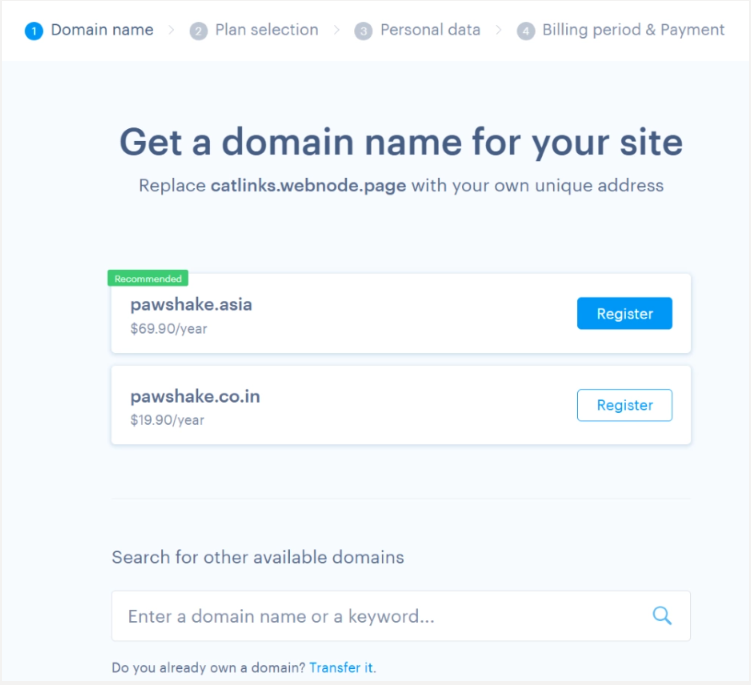
The best domains are:
- short
- easy to remember
- and related to your topic
If you already run a business website, the easiest option is to add your blog under the same address (like yourbusiness.com/blog). This way, every new post helps the whole site show up better in Google, Bing or any other search results – where potential customers can find your site online.
If you’re starting from scratch, Webnode gives you a free address automatically (like yourwww.webnode.com/blog). You can use that as long as you want, and when you’re ready, switching to your own custom domain inside Webnode only takes a couple of clicks – no tech setup required.
For example, a local seamstress could start with a free Webnode address to share fashion and clothing tips like “how to choose the right fabric” or “5 quick fixes for common wardrobe issues.” As her audience grows, she can easily upgrade to a custom domain such as sewingbyanna.com to look more professional and attract new clients.
4. Customize your blog’s design or just pick a template
Your blog’s design isn’t just about looking nice. A clear design makes your posts easier to read, builds trust, and helps readers stay longer. Think of it as the entrance to your shop – it should invite people in and make them want to look around.
With Webnode, you begin by choosing a professional template that’s already designed to work well on computers, tablets, and phones. After that, you can customize it to fit your style:
- adjusting colors
- fonts
- images
- adjusting the sections on the page.
You don’t need to code or hire a designer, just make a few simple clicks to make the template your own.
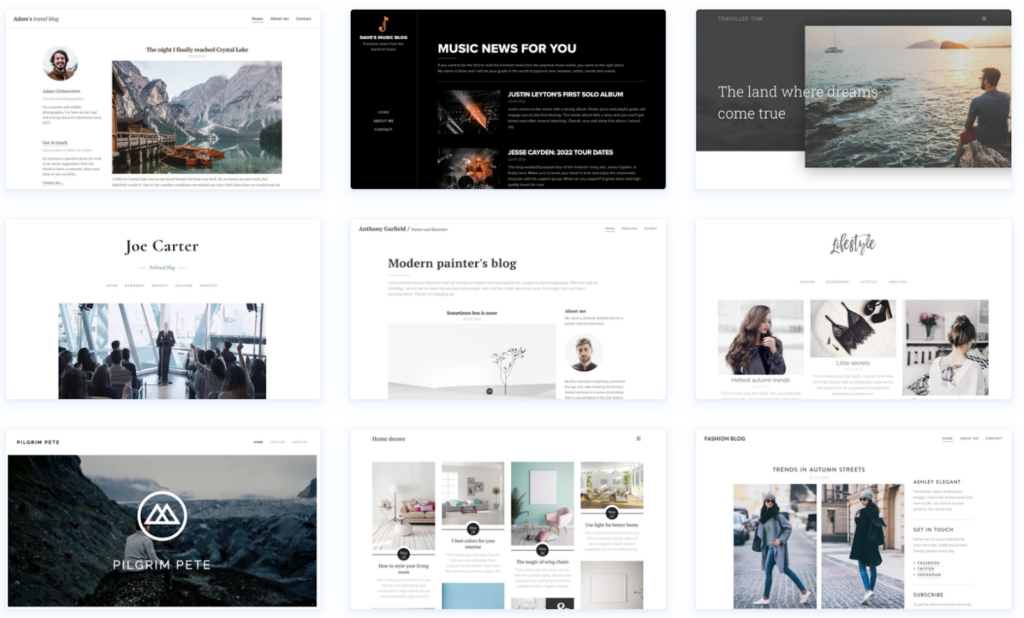
For example, a coffee shop could pick a warm, inviting template to share brewing tips and seasonal offers, while a fitness coach might choose a clean, energetic style that makes workout articles and client success stories stand out. In both cases, the template provides a strong base, and small adjustments make it unique.
Tip: Always check your blog on a mobile phone before publishing. Most readers browse on their phones, so text should be easy to read and buttons easy to tap.
5. Organize your blog structure
Before you start writing, it helps to plan the structure of your blog. A good structure makes it easy for visitors to find what they’re looking for and encourages them to read more of your content. Think of it like organizing a store: when things are in the right sections, people stay longer and come back more often.
Keep it simple. Most blogs work best with 4–6 main categories. Too many categories can confuse readers. For example, a hair salon could group posts into “haircare tips,” “new styles,” and “products we recommend.” A travel enthusiast might use categories like “destinations,” “travel hacks,” and “packing lists.”
If your blog supports a business, don’t forget to include an About page (to show who you are) and a Contact page (so customers can reach you). These build trust and can lead directly to new clients.
In Webnode, creating categories is easy—you just add a new blog page and assign posts to it.
6. Create high-quality blog content
Content is the heart of your blog. High-quality posts are what keep readers coming back and help search engines (like Google) show your blog higher in results. This happens thanks to SEO (search engine optimization) – the process of making your content easier to discover online, and something you’ll need to manage as your blog grows.
Good content:
- solves problems
- answers real questions
- shares useful ideas.
A vet might write “how to spot early signs of illness in pets.” A small bookstore could share “5 must-read novels this summer.” A language tutor might post “common mistakes English learners make (and how to fix them).”
Each post gives value, builds trust, and shows expertise.
Consistency is just as important as quality. A content plan doesn’t have to be complicated—just a simple list of topics you want to cover. This helps you post regularly and ensures you don’t run out of ideas. If you’re not sure where to begin, our guide to blog topic ideas is a great place to start.
Don’t forget variety. Text is important, but images, videos, and even infographics can make your content easier to understand and more engaging.
For example, a café could share a recipe post with step-by-step photos, or a travel blog could include a short video tour of a destination.
If you’re a business owner, blogging can also be part of a larger strategy. Our guide on content marketing for small businesses explains how blog posts, social media, and email work together to attract customers and build trust.
How to find blog ideas to write about
Before you start writing, you’ll need to know what kind of content your blog will include.
A personal blog often shares experiences:
- what you’ve done
- seen
- learned
- experienced.
A professional or company blog, on the other hand, usually explains:
- solutions to customer problems
- covers industry-related topics.
Brainstorm from customer questions
If you already work with clients, you know what they ask most often. Writing posts that answer those questions is a perfect starting point.
For whom it is: Service providers (dentists, accountants, mechanics) and businesses that get a lot of FAQs.
Follow industry news and events
Conferences, fairs, or webinars often highlight trends and controversial topics. Write about them from your reader’s perspective to stay relevant.
For whom it is: B2B companies, consultants, or anyone in a fast-changing field like IT, law, or finance.
Check online communities
Facebook or LinkedIn groups, Reddit, Quora, and niche forums are full of questions your audience is asking. Use their search bars to spot repeated topics, and add them to your content plan.
For whom it is: Hobby bloggers (travel, fashion, crafts) and small businesses targeting niche audiences.
Look at Youtube
Even if video is booming, many people still prefer written content. Search your niche on YouTube, see which videos get the most views, and turn the same themes into blog posts with your own unique perspective.
For whom it is: Creative bloggers (photography, cooking, DIY) and local businesses that want to show expertise visually.
Tip: Find out the best tips for starting a video blog or learn how to make video part of your marketing strategy.
Use search tools
Search engines often show related terms and “People also ask” questions. Tools like AlsoAsked or Ahrefs Keyword Generator can help you find what people search for. Paid tools like DragonMetrics, SERanking or Semrush go deeper if you want more data.
For whom it is: Anyone who wants data-driven content ideas, especially businesses that need steady traffic.
Study competitors
Check what topics your competitors write about. If they’re paying to promote a post, that means demand is high. Don’t copy. Add a unique angle, story, or format.
For whom it is: Small businesses in competitive industries (restaurants, salons, online shops) who want to stand out.
Track search trends
Google Trends can show whether interest in a topic is rising or falling. This is helpful for spotting seasonal opportunities (like “tax tips” in spring or “holiday recipes” in December).
For whom it is: Seasonal businesses (tax advisors, travel agents, gift shops) and bloggers tied to events or holidays.
Reuse your best content
If you already have posts that perform well, expand them. Write updates, follow-ups, or spin-offs to get even more value out of proven topics.
For whom it is: Bloggers and businesses with existing content they can refresh and repurpose.
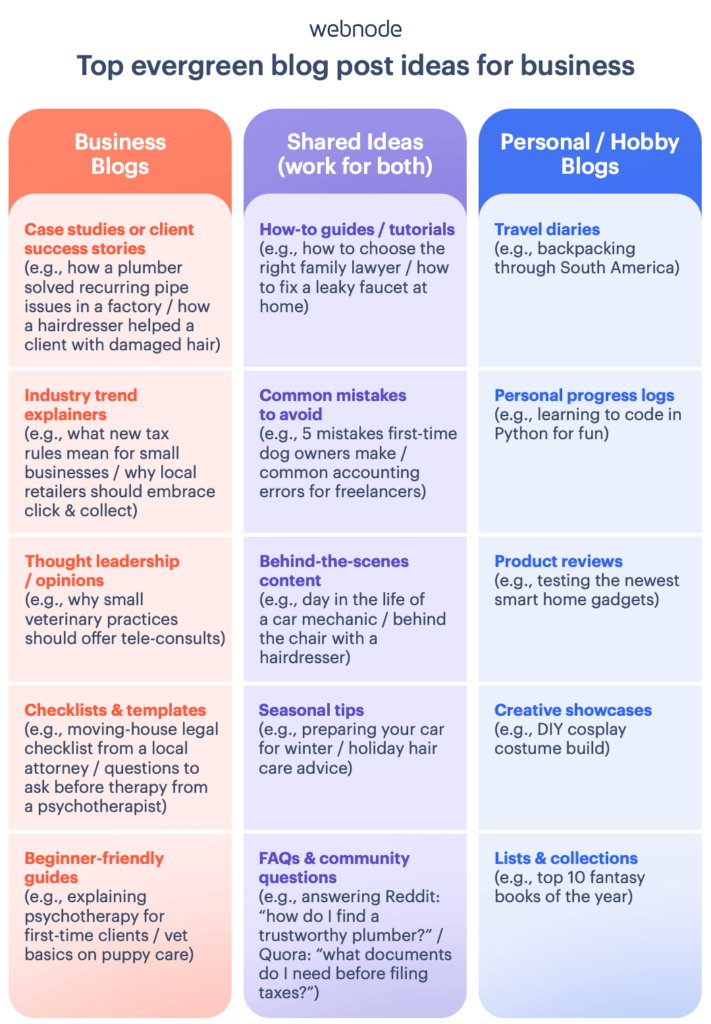
How to create a blog content people want to read
Once you know what to write about, the next step is figuring out how to actually create it. Many beginners worry they’re not good writers — but you don’t have to be.
Today, free AI tools like ChatGPT, Perplexity, Google Gemini, or Microsoft Copilot can help you brainstorm ideas, draft text, or check grammar. The trick is to use them as assistants, not as a full replacement for your own experience and voice.
And if you want the easiest start possible, try Webnode’s own AI Website Builder. It’s already built in, so you can create your blog in just a few seconds. See how smoothly it works in practice.
Write yourself with the help of an AI
Use AI as your assistant, then finish the work yourself. For example:
- Ask it for 5 title ideas, then pick the one you like best.
- Get a suggested outline, then add your own experience into each section.
- Let it check spelling and grammar, but always read it through before publishing.
FAQ: Is it ok to use AI to write a blog?
Yes, as long as you don’t let it do everything for you. AI is great for getting past “blank page syndrome.” But if you only publish what the tool writes, the blog will sound flat and impersonal. Readers want to hear your story, your tips, and your real-life experience.
FAQ: Can people tell if a blog was written by AI?
Sometimes. AI text can feel a bit “robotic” – lots of words, but not much personality. If you add your own examples (like how you solved a problem for a client, or a funny story from your work), no one will care if AI helped you get started.
FAQ: Will AI hurt my SEO?
Not if you use it wisely. Google, and other search engines, don’t punish you just for using AI. It cares if your content is useful. If your blog is nothing but auto-generated posts, search engines may treat it as “thin content.” But if AI helps you publish faster and you still add value, search engine optimization and its results can actually improve.
Get help and hire a copywriter
AI tools are helpful, but maybe you’d rather not write at all. That’s completely fine. Many businesses and individuals prefer to work with a professional copywriter who can capture their tone, simplify complex ideas, and create blog posts consistently.
Where to find a good copywriter
- Direct recommendations – often the best way to find someone reliable for long-term cooperation.
- Communities on LinkedIn or Facebook – great for finding writers with specific industry knowledge.
- Freelance platforms like Upwork or Fiverr — a quick way to test different writers, especially for one-off tasks.
Review their samples — ideally in your field (law, health, trades, etc.).
Make sure they explain things simply. If they can make a tax tip or car repair sound easy, they’re the right match for your audience.
Think long-term. A writer who gets to know your business will save you time and deliver better results with each post.
Tip: Even if you hire a copywriter, AI can still play a supporting role. For example, generating quick outlines, keyword ideas, or editing drafts faster. That way you get the best of both worlds: human creativity and AI efficiency.

7 Reasons why most bloggers fail and how to avoid it
Most bloggers don’t fail because of the blog platform. They fail because of their approach. If you want your blog to bring business results, avoid these common traps.
- No target audience
Writing “for everyone” means you end up connecting with no one. A small law firm should write for potential clients with legal questions—not for students doing research papers. Without a defined audience, your content won’t attract the right readers or bring in business.
- Chasing trends instead of relevance
Trending topics might get clicks, but if they’re not connected to your business, they won’t bring paying customers. A metalworking company won’t win new clients by ranking for “what is metalworking” – those readers are students, not buyers.
- Ignoring data
Many bloggers don’t track results. They don’t know where visitors bounce, which posts perform best, or which ones bring leads. Use free tools like Google Analytics or Search Console to see what works and what doesn’t, so you can focus your efforts.
- Focusing only on consistency
You’ll hear advice like “publish twice a week.” But for most businesses, creating content just for the sake of it is wasted effort. And a very expensive activity. A handful of well-written, evergreen posts that solve real problems can outperform hundreds of shallow articles.
- Content without value
Blog posts and articles that don’t answer questions, don’t solve problems, and don’t bring useful insights won’t earn trust. Your goal is to publish fewer but better articles that people want to bookmark, share, or use in real life.
- Lack of structure and internal linking
If posts aren’t connected, readers hit a dead end and leave. Always link to 2–3 related blog articles to keep them exploring. This also helps your SEO (search engine optimization).
- Wrong promotion or none at all
Publishing is only half the job. Blogs work best when supported by social media, newsletters, and smart promotion. A blog post can feed a content calendar. One article can be repurposed into email updates, LinkedIn and Facebook posts, or Instagram stories.
Avoid these mistakes, and your blog can be a lasting business asset, not just another abandoned website.
How to promote a blog and build an audience
Even the best content won’t help if no one sees it. Promotion is just as important as writing. The good news: you don’t need a big budget to get your first readers.
Social media
Start with what you already have. Share your posts on social media, include them in your email signature, or mention them to customers.
For example, a vet clinic could share a post about “seasonal pet care tips” on Facebook, while a carpenter might post a tutorial on “how to care for wooden furniture” and share it with local groups.
Connect your blog with your social media accounts and add share buttons so readers can post your articles without leaving your site. You can even show Facebook comments directly under your posts — a simple way to spark conversation and cut down on spam. In Webnode, you can set this up easily in the settings.
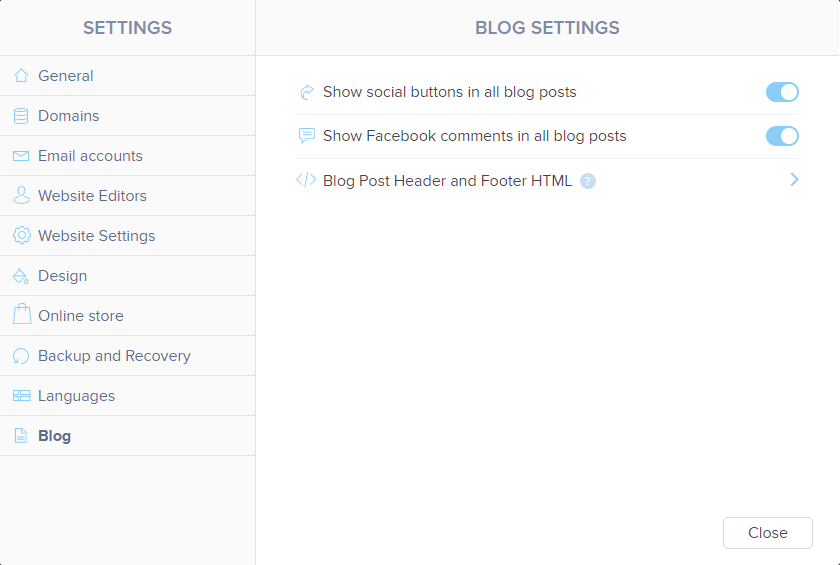
Some people wonder if a website is still necessary when they already use social media. The answer is yes—a blog or website gives you control, ownership, and stability that social platforms can’t guarantee. We explain the differences in detail in our article on website vs. social media.
Newsletter
Building an email list is one of the most powerful ways to keep readers coming back. Add a simple sign-up form to your blog and send updates when new posts go live. With Webnode, this is easy thanks to the built-in newsletter registration form. If you’ve never done it before, our email marketing guide for beginners walks you through how to get started and what to send.
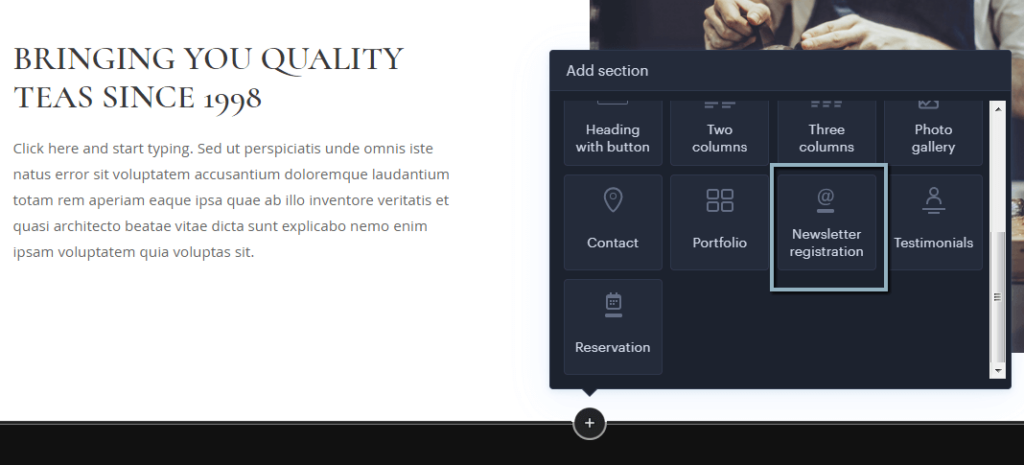
Newsletter registration form
Linkbuilding
Internal links also help. If you write an article about “summer hairstyles,” link to your earlier post on “haircare tips for dry weather.” This not only helps readers discover more of your content but also improves your SEO (search engine optimization).
Paid Promotion
Once you’re ready to go further, you can experiment with small paid promotions. A local IT repair shop might invest a few dollars to boost a post about “common laptop problems and quick fixes,” on Facebook or Google Ads reaching more potential customers nearby. To find out if ads are right for you, compare the pros and cons of online advertising.
How to make money with a blog
Making money with a blog – often called monetization – doesn’t happen overnight. But with consistent effort, your blog can become a reliable source of extra income, or even support a full-time business.
Here are the 5 most common ways to earn from your blog:
- Advertising
Programs like Google AdSense let you show ads on your site. You earn money when people see or click them. This works best for blogs with higher traffic. Just don’t overload your pages with ads – too many can drive readers away.
Another option is to promote your blog posts directly on ad platforms. Even a small budget can make a difference if you choose the right channel:
- Google Ads are useful if people are already searching for your topic (e.g., “emergency plumbing tips” or “how to start a food blog”).
- Facebook Ads work well for local businesses, since you can target people by location, age, or interests.
- Instagram Ads are a strong fit for visual niches like fashion, food, fitness, or travel.
- LinkedIn Ads are best for B2B companies, where the goal is to reach decision-makers and professionals.
But keep in mind not every blog is worth advertising. If your content isn’t ready, your audience isn’t defined, or your blog has no clear goal, ads can waste money. Focus first on building valuable posts and a steady readership before investing in paid promotion.
- Affiliate marketing
Affiliate marketing means earning a commission when someone buys through a link on your blog.
For example, a car mechanic could recommend specific tools and link to them, while a photographer might suggest camera gear.
Each time a reader purchases through those links, the blogger earns a share. Learn more in our guide to affiliate marketing.
Tip: Webnode also has its own affiliate program – sign up and earn $100 for every Premium user you generate with your blog.
- Sponsored content
Once your blog gains readers, companies may offer to pay you for publishing posts about their products or services. This works especially well in niches like fashion, technology, or travel. Always be transparent with readers when content is sponsored.
But a word of caution: sponsored content can easily turn into irrelevant articles full of low-quality backlinks. That not only hurts your readers’ trust but can also damage your brand in the long run. If you decide to accept sponsored posts, manage them carefully. Make sure the content is useful, relevant to your audience, and matches the quality of your own posts.
- Paid guest posts
If your blog becomes successful, you may get requests from other writers or companies to publish their articles on your site. This is a common tactic used to gain backlinks (links pointing back to their own websites). Paid guest posts can be a win-win: you earn money, and they get exposure.
But just like with sponsored content, be careful. Many guest posts are filled with irrelevant links or low-quality writing. Publishing them without strict control can damage your brand and make readers stop trusting your blog. Always review guest posts carefully, check the relevance of links, and make sure the content adds value for your audience.
- Digital products and services
Some bloggers create and sell their own digital content, like e-books, courses, webinars or design templates. A fitness coach could sell workout plans, while an IT consultant might offer troubleshooting guides.
- Premium memberships
Another option is to keep some content free and offer premium posts or resources to paying subscribers. The key is to make sure the paid content delivers real value people can’t find elsewhere.
Keep in mind not every blog makes money directly.
In many businesses, especially B2B with long sales cycles that take months or even years, a blog plays a different role. Instead of generating instant revenue, it attracts qualified leads, builds authority, and nurtures trust over time. A well-written article might “sow a seed” today that leads to a client meeting next year.
This is where blogs fit into an omnichannel strategy. Omnichannel simply means reaching your audience across many touchpoints: your website, blog, email, social media, and even offline events, so that no matter where potential clients encounter you, they get consistent value and messaging. A blog becomes one important piece of that bigger puzzle.
If you’d like more details on different monetization options, check our full guide on how to monetize a blog.
How much does it cost to start a blog
The good news: starting a blog doesn’t have to cost anything. With Webnode, you can create your blog for free in just a few minutes by picking a ready-made template and customizing it. This is the easiest way to test if blogging is right for you without spending money upfront.
When you’re ready to grow, paid plans start at just $4.50/month and go up to $22.90/month, depending on what you need.
For regular websites and blogs
- $4.50/month — good if you just want a simple personal blog with your own domain name.
- $8.50–$12.90/month — works well for professionals like therapists, attorneys, or vets who want a clean, ad-free blog with more space for articles and photos.
- $22.90/month — best for growing businesses that need multiple email accounts, bigger storage, and priority support.
For online stores and e-commerce blogs
- From $12.90/month — designed for anyone who wants to blog and sell products or services directly on their site.
With a paid plan you can remove ads, connect your own domain (like www.myblog.com), add a professional email address, publish more photos and videos, and get direct support from Webnode’s multilingual team. That way, your blog grows with you — from a side project to a professional site.
Can a blog still be successful in 2026 and beyond
Yes. Blogging isn’t dead, it’s very much alive and growing. Every year, millions of people still search for how to start a blog for beginners, proving that blogs remain one of the best ways to share ideas, build trust, and even earn income online.
For businesses, blogs are more than just articles. They’re a way to answer customer questions, generate qualified leads, and support long sales cycles.
For hobby bloggers, they’re a place to connect with like-minded people, document passions, and even turn side projects into income streams.
Conclusion
Whether you’re a local attorney, a vet, a hairdresser, or someone who just wants to share a personal journey, a blog is still one of the most effective (and affordable) tools you can own.
AI can speed up the writing process, but it can’t replace your unique perspective. What makes blogs successful in 2026 and beyond is the same as it’s always been: useful content, written with a personal voice that readers trust. Blogging is not only still a thing – it’s one of the few digital channels you truly own.

Martina Zrzavá Libřická is a Freelance SEO Consultant at MartiSEO with 13+ years of experience both in-house (IKEA, Emplifi – formerly Socialbakers) and agency (Accenture). She specializes in International SEO, Product Management, and Strategy. Martina is an active mentor at Women in Tech SEO, The Freelance Coalition for Developing Countries, and privately. She enjoys organizing workshops and training for organizations or individuals. Martina actively publishes about SEO on LinkedIn in the Czech Republic to dispel the myths and educate people in organic search topics.